





County 4-H Officials And Members Take A Rapid Response To Swine Disease Concerns
US - Concerns about spreading diseases, and the threat of forced slaughter of swine after competing at the county fair, has resulted in a statewide change in the process for how identification tags are applied to 4-H hogs. 20 April 2007
 1 minute read
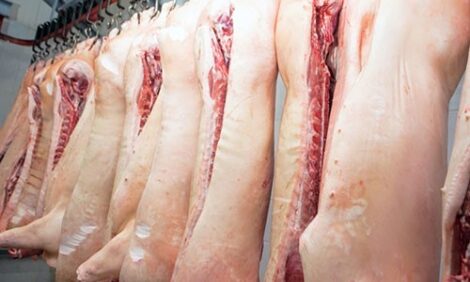
 A hog is seen in this file photo taken at the 2004 Kandiyohi County Fair in Willmar. A change in how identification tags are applied to 4-H hogs will now require 4-H families to obtain and attach ear tags and complete identification affidavits. The change came about amid concerns about spreading diseases, and the threat of forced slaughter of swine after competing at county fairs.
Kandiyohi County 4-H members received letters last week explaining the change, which is being enforced across the state immediately.
The new rule applies only to swine.
“We’re being proactive,” said Jodi Bakke, Kandiyohi County 4-H coordinator. “We don’t want to be contributing to any livestock disease.”
The actual change to 4-H’ers isn’t all that significant.
It will require 4-H families to obtain and attach ear tags and complete identification affidavits, rather than having it done by 4-H staff or trained volunteers.
“4-H wanted to be part of the solution,” said Brad Rugg, director of Fairs and Animal Science Programs at the Center for 4-H Community Youth Development at the University of Minnesota.
But the reason for the change — and the possible consequences of slaughtering all swine after shows if changes aren’t made — is significant.
Source: West Central Tribune Online