






Losses from anoestrus
 9 November 2018
 5 minute read
Anoestrus is common both in the maiden gilt and in the sow post-weaning. Puberty is initiated in the gilt by complex hormonal mechanisms that are associated with growth and age. The hybrid gilt commences oestrus from around 160 days of age onwards but some exotic breeds such as the meishan come into heat much earlier.
Factors in the external environment stimulate the higher centres of the brain which activates the pituitary gland (Fig.5-15). This tiny gland at the base of the brain produces the hormones which start the oestrus cycle (the hormone surge). There are primarily two hormones involved; the follicle stimulating hormone (FSH), which as the name implies causes the ovaries to be stimulated and to produce follicles containing eggs. The second is the luteinising hormone (LH) which at the point of oestrus is excreted into the bloodstream to act on the follicles and cause the eggs to be released. The developing follicle at the time of oestrus is about the size of a small cherry. There may be up to 15 to 18 of them in each ovary. After the egg has been released from the follicle and ovary the remaining tissues develop into a body called the corpus luteum. This produces the hormone progesterone and the levels in the blood rise as oestrus subsides. The hormone changes are depicted in Fig.5-16.
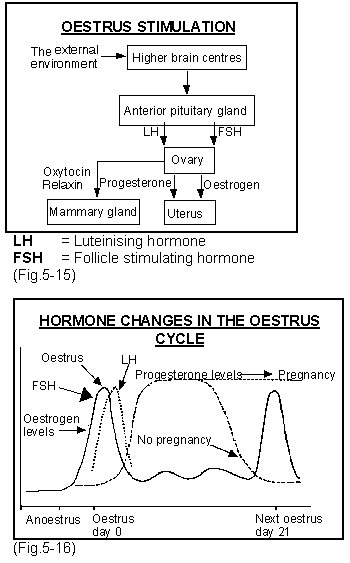
Oestrus is initiated by the ovary which produces the other female hormone, oestrogen and it is this that is responsible for the outward signs of heat. After ovulation oestrogen levels drop as the progesterone rises. Females with high levels of progesterone in the first three days after mating are more likely to create an improved environment for the survival of the fertilised egg. High levels of feed intake in the first two to three days may lower progesterone levels and thereby result in an increase in embryo mortality.
Key factors that stop the hormone surge and produce anoestrus in the gilt
- Age - immaturity.
- Bad external environment
- Bullying. Stress.
- Disease.
- High stocking density.
- Lameness. Pain.
- No contact with the boar and his pheromones.
- Poor light.
- Poor nutrition.
- Poor management.
- Sunburn. Skin damage.
Anoestrus problems in gilts or sows can be a major cause of economic loss, the significance of which is often unrecognised.
The most common problem is failure of the stockperson to recognise oestrus. Field experience shows that approximately one third of anoestrus gilts examined at slaughter have been cycling, one third are pregnant and only one third are actually in anoestrus.
If there is an oestrus problem in your gilts then consider the following five areas and identify the potential failures in the system.
Key points to stimulating oestrus in the gilt
- Develop a successful management system
- Create good health
- Acclimatisation of new gilts - create a low stress environment
- Provide good nutrition
- Satisfy the gilt's physiological needs
Develop a successful management system
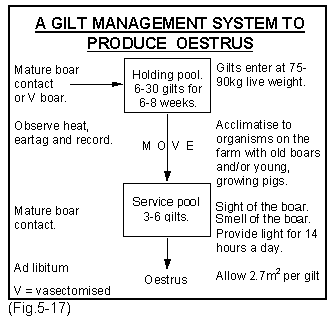
It is important to develop a predictable method of management, an example of which is shown in Fig.5-17. Note this starts with a large group of gilts, fed on a good grower diet ad lib to 90kg weight and given mature boar or V-boar (vasectomised) contact. In some herds however, particularly those with a very lean genotype, it may be better to feed a dry sow diet with a lower lysine level (0.7%) to increase fat deposition. The rate of growth and nutrition also needs to be considered if leg weakness is a problem. The type of nutritional intake becomes an important variable. Does the gilt respond to the existing system of feeding and management? If she does not then make a change. A P2 fat measurement of at least 18mm should be achieved by point of mating. Heat is observed during the initial period in the holding pool and once gilts have been identified at their first oestrus they should be ear tagged and moved into the service area in small groups of no more than six. The stocking density should provide for approximately 2.7m2 per animal.
The stages of the oestrus cycle
DAY 0 - 1 Proestrus - This is the period just prior to standing for mating. The vulva reddens and the gilt becomes sexually active.
DAYS 1 - 3 Oestrus - The gilt stands firmly to the boar.
DAYS 3 - 6 Metoestrus - The corpus luteum develops and produces progesterone and the period of sexual activity disappears.
DAYS 6 - 18 Proestrus - The quiet period prior to the next oestrus.
DAYS 18 - 22 Oestrus again.
Key points to a good gilt management system:
- Ear tag all gilts and record them as they come into heat.
- Vaccinate gilts against porcine parvovirus in the holding pool at around 90kg as you tag them.
- Move cull sows at weaning into this pool because as they come into heat urine containing oestrogen acts as a stimulus. An alternative technique is to spray urine from sows in heat onto the noses of anoestrus gilts.
- Preferably use an old vasectomised boar in the holding pool for intermittent periods of 10 days. If you use an entire boar - be sure he cannot mate gilts
- Change the boar in the holding pool of gilts regularly every 7-10 days.
- Alternatively expose the gilts to the boar for 20 minutes daily under observation. Only use mature boars.
- A high stocking density of less than 1.4 sq.m. per animal will have a marked depressant effect on oestrus.
- Provide a minimum of 10-14 hours of light per day, that is adequate to read a newspaper at floor level and 10-14 hours of darkness.
- Make sure pens are clean, dry and draught free and not in heavy shadows.
- Make sure there are no disease problems e.g. worms, mange, enteric or respiratory diseases.
- Determine the most responsive feeding programme and ad lib feed 2-3 weeks prior to expected matings.
- Acclimatise the gilts to your farm.
Create good health
The health status and nutrition of the gilt is very important in deciding whether she will come into oestrus or not. Look at the group of gilts. Are they a good weight for age or is growth variable or poor? If this is the case is there any clinical evidence of disease, mange for example, which may be responsible for anoestrus. Active respiratory diseases, or previous pneumonia, heart sac infection or pleurisy can inhibit puberty and the onset of oestrus. Atrophic rhinitis can destroy the sensitivity of the nose and therefore the response to pheromones (male hormones). If gilts are regularly moved into continually populated pens, heavy parasite burdens and coccidia can build up that can interfere with the digestive process. Anoestrus problems have been associated with these.