





Farmers Not to Be Blamed for Beta-Agonist
MALAYSIA - The banned beta-agonist substance found in pigs have found its way not through unscrupulous farmers looking to increase their livestock's lean meat but through a permissible hormone. 13 January 2009
 1 minute read
Health Minister Datuk Liow Tiong Lai said five of the 15 pig farmers found to have been using beta-agonist last year unknowingly administered their livestock with an allowed drug, which contained the substance.
The drug is called ractopamine, a growth hormone for animals.
"We are considering banning it since it has beta-agonist. It was at the request of the Federation of Livestock Farmers of Malaysia, especially the farmers whose pigs have been quarantined after testing positive for beta-agonist," he said.
NST Online reports that there are 597 pig farms in the country.
The ministry's Pharmaceutical Services Department would be monitoring all medication given to pigs to ensure there were no illegal substances present, Liow said chairing a Task force against Beta-Agonist meeting yesterday.
He warned pig farmers not to use beta-agonist, a compound to promote leanness and growth, as it can cause cancer if contained in large amounts.
"Under the Food Act, those found to be using the substance can be fined up to RM100,000 or jailed up to 10 years.
"Consumers can do their part by knowing how pork tainted by beta-agonist looked like."
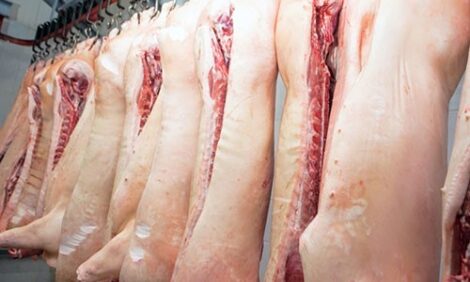
Pork containing the substance will be dark red and have more muscle mass with a solid texture. Normal pork muscle texture is softer, and it is fresh red.
Further Reading
 |
- | Go to our previous news item on this story by clicking here. |