




Weekly pig report: Mexico offal curbs increase pressure on pork trade
Lingering restrictions and added verification hurdles are still costing US exporters and capping carcass value gains
 3 July 2026
 3 minute read
 By:
By: Lean hog futures bulls show signs of life
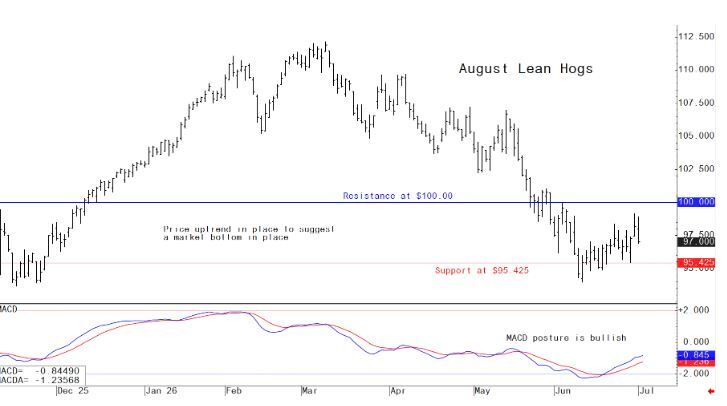
August lean hog futures on Wednesday slid $1.15 to $97.05 after hitting a three-week high early on. Lean hogs finished lower after trading higher early in the session as premiums to the cash market spurred profit-taking. The futures market had been awaiting a reversal in the cash hog market. After the past couple days of gains and a bounce in the cash market today, it appeared to be a “buy the rumor, sell the fact” event. Still, futures are seeing modest strength on the daily bar chart as prices maintain an uptrend. The latest CME lean hog index is down 17 cents to $91.24. Today’s projected CME index price is up 24 cents to $91.48, ending the string of recent losses. The national direct five-day rolling average cash hog price quote for Wednesday was $97.14.
Pork Industry and related news
Weekly USDA US pork export sales
US Pork: Net sales of 26,200 MT for 2026 were up 63 percent from the previous week, but down 6 percent from the prior 4-week average. Increases were primarily for Mexico (9,700 MT, including decreases of 900 MT), Japan (3,700 MT, including decreases of 300 MT), South Korea (2,800 MT, including decreases of 200 MT), Colombia (2,400 MT, including decreases of 100 MT) and Canada (2,100 MT, including decreases of 300 MT). Total net sales of 200 MT for 2027 were for Australia. Exports of 32,000 MT were up 7 percent from the previous week, but unchanged from the prior 4-week average. The destinations were primarily to Mexico (15,900 MT), Japan (4,400 MT), China (3,400 MT), South Korea (2,200 MT) and Colombia (1,500 MT).
Mexico’s pork offal curbs keep costing US exporters
Partial reopening has eased the immediate disruption, but Iowa and Texas restrictions and source-verification hurdles continue to pressure a high-value trade channel
Mexico’s restrictions on US pork offal remain a costly problem for the US pork industry even after some shipments resumed. The initial pseudorabies-related closure lasted more than a month and, according to US Meat Export Federation (USMEF) estimates, cost exporters roughly $7 million per week. The trade impact is narrower now, but not gone: product sourced from Iowa and Texas remains restricted, while source-verification requirements are complicating shipments from other states.
The issue is important because offal and variety meats are not a marginal product in Mexico. They are central to widely consumed foods such as tacos, carnitas and other affordable dishes, and US suppliers have spent years building reliable demand for cuts that often have less value in the domestic market. That makes Mexico’s restrictions a two-sided problem: US exporters lose sales and carcass value, while Mexican retailers, restaurants and consumers face tighter supplies and higher prices.
USMEF’s Rigoberto Treviño says the shortage has already pushed some prices sharply higher, with pork uterus among the products that have reportedly doubled in cost. That is a warning sign for exporters because prolonged shortages can change buying habits. If Mexican restaurants and retailers are forced to adjust menus, reduce offerings or source from alternative suppliers, the US could lose some of the market development gains it has made through programs such as Cantina Vibes and chef-training initiatives.
The animal-health argument for maintaining the restrictions appears to be weakening. USDA has said the pseudorabies detection does not pose a food-safety risk, and USMEF says the World Organization for Animal Health has certified the Iowa event as isolated and contained. That shifts the issue from disease control toward trade administration: how quickly US and Mexican officials can translate that finding into updated import rules, clearer documentation and restored confidence at the border.
The longer the remaining restrictions stay in place, the greater the risk that a temporary animal-health response becomes a broader commercial setback. For US pork producers, offal exports help maximize whole-carcass value. For Mexico, US offal supplies support affordable foodservice demand. Restoring full access would therefore matter not only for exporters, but also for Mexican buyers who rely on consistent US supply to keep prices and menus stable.
The next week’s likely high-low price trading ranges:
August lean hog futures--$95.425 to $100.00 and with a sideways-higher bias
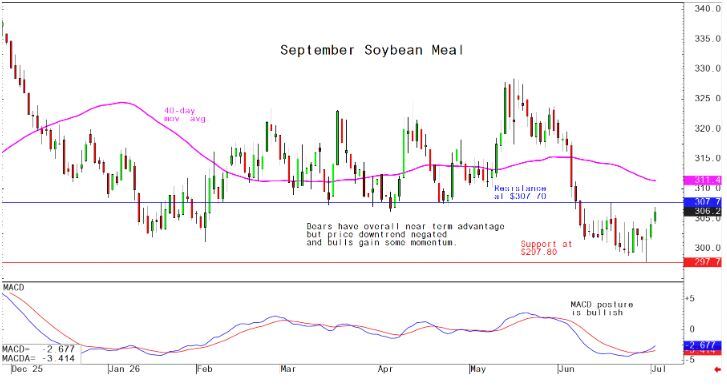
September soybean meal futures--$300.00 to $315.00, and a sideways-higher bias
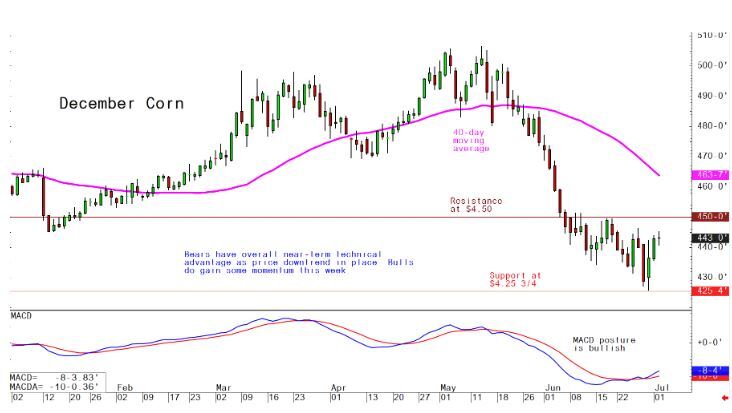
December corn futures--$4.25 3/4 to $4.60 and a sideways-higher bias
Latest analytical daily charts lean hog, soybean meal and corn futures