





Mix it up: Resuspension times for injectable antibiotics can vary widely
Excenel® RTU EZ resuspended within 10 seconds
 4 March 2026
 3 minute read
 By:
By: Key takeaways
- If a bottle of injectable antibiotic isn’t shaken long enough to ensure the drug is properly resuspended, the result is very likely to be underdosing that could result in inadequate treatment.
- Improper resuspension can also lead to an overdose when most of the bottle has been used and all that’s left is the active ingredient settled on the bottom. Overdosing can not only have adverse effects on the animal, but it could lead to a residue violation.
- In a resuspension recovery (mixing) time comparative study, on average, 90% of Excenel® RTU EZ resuspended within 10 seconds, while only 51% of the generic, Cefenil® RTU, resuspended at 10 seconds.1
An analysis of similar injectable antibiotics used for swine respiratory disease pathogens demonstrates that resuspension times can differ substantially — a difference that could lead to improper dosing, according to Eva Jablonski, DVM, MS, Veterinary Specialty Operations, Zoetis Pork.
“If a bottle of injectable antibiotic isn’t shaken long enough to ensure the drug is properly resuspended, a likely result is underdosing which may result in inadequate treatement,” Jablonski said.
Conversely, improper resuspension can also lead to an overdose when most of the bottle has been used and all that’s left is the active ingredient settled on the bottom. Overdosing can not only have adverse effects on the animal, but it could lead to a residue violation, she cautioned.
The analysis Jablonski cited compared resuspension times for Excenel® RTU EZ (ceftiofur hydrochloride) and a generic version of Excenel® RTU ceftiofur hydrochloride ready-to-use sterile suspension. Both are indicated for common pathogens involved in swine respiratory disease.
Zoetis scientist Kent Alleman, PhD, who led the analysis, said vials of each antibiotic were stored upright at room temperature for 10 days prior to testing. To test for resuspension, the vials were shaken by hand, and 5 mL samples were collected at regular intervals for up to 90 seconds. The samples were then tested for potency to determine the extent of resuspension. Multiple vials of each product were sampled, and each 5 mL sample was tested three times.
Resuspension recovery
“At the 10-second interval, we had at least 90% mean recovery with Excenel® RTU EZ, but for the generic version of Excenel® RTU, it was only about 50% resuspended,”1 he reported.
The generic product showed a gradual increase in resuspension over the 90-second study interval to a maximum of 87%, while Excenel® RTU EZ remained suspended ≥ 88% through 50 seconds (Figure 1), Alleman said.
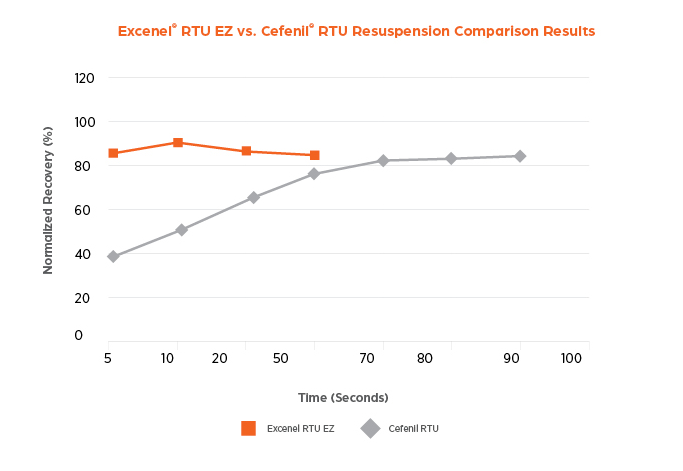
Comparison chart of Excenel RTU EZ and Cefenil RTU resuspension rates over time
“That means that to ensure resuspension,” Alleman said, “the generic product would have to be shaken for at least 90 seconds.” This is consistent with the product label, which also instructs users to shake for 90 seconds to ensure complete resuspension. Jablonski said that anyone injecting swine, especially in large numbers, knows there may not be time to spend repeatedly shaking a bottle to make sure the contents are thoroughly mixed.
“Shaking for even half a minute can seem like an eternity,” she said. In addition, injectable antibiotics in a commercial swine setting need to be administered correctly for optimum effectiveness. “If the product is more convenient for caregivers to use, it’s more likely to be used correctly and treatment outcomes may be better.”
Jablonski noted all Zoetis ceftiofur products, including Excenel® RTU EZ, are covered by the Zoetis Residue Free Guarantee. If one of these products is used according to the label but a violative residue occurs, Zoetis will compensate for the pork market value of the animal. “Residue violations are most likely to occur when a drug isn’t administered exactly as it should be, which can be avoided with careful veterinary oversight,” she said. “One way veterinarians can prevent improper dosing is by educating caregivers about the importance of properly resuspending injectable antibiotics.”