





Weekly pig report - Lean hog futures prices still in uptrend
Economic changes and an increase in African Swine Fever cases in Spain influencing pig price changes
 9 January 2026
 6 minute read
 By:
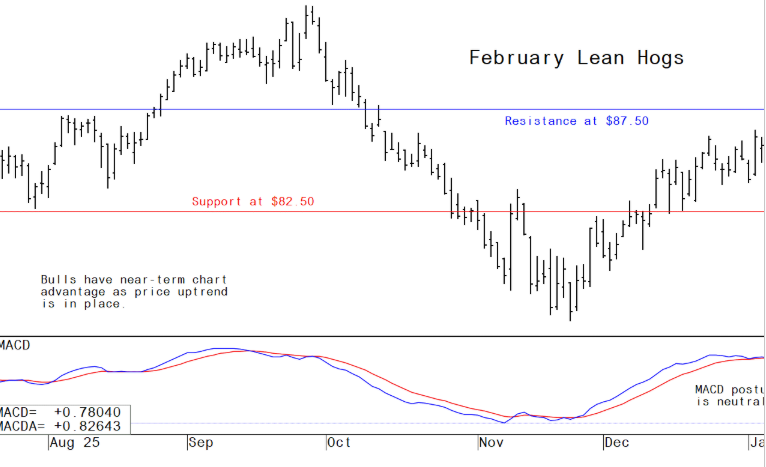
By: February lean hog futures on Wednesday fell 87 1/2 cents to $84.80. Futures saw routine profit-taking pressure after prices hit a 2.5-month high on Monday. Also negative for futures, cash hog prices have begun to slip lately. Still, the February lean hog futures contract is above the latest CME lean hog index, which is price-friendly for futures. The latest CME lean hog index is down 8 cents to $81.54. Thursday’s projected cash index price is down another 29 cents at $81.25. Technicals in the lean hog futures market remain overall bullish as prices are trending higher on the daily bar chart.
Weekly USDA US pork export sales
Beef: Net US sales 10,600 MT for 2026 marketing year, which began January 1, were primarily for South Korea (4,400 MT, including decreases of 200 MT and 1,500 MT - late), Mexico (1,600 MT, including decreases of 100 MT and 300 MT - late), Taiwan (1,500 MT), Japan (1,200 MT, including decreases of 600 MT), and Canada (800 MT). Net sales of 2,200 MT were carried over from the 2025 marketing year, which ended December 31. Exports for the period ending December 31 of 12,700 MT brought accumulated exports to 697,000 MT, down 14 percent from the prior year’s total of 797,700 MT. The primary destinations were to South Korea (5,200 MT, including 1,500 MT - late), Japan (3,500 MT), Taiwan (1,300 MT), Mexico (1,000 MT, including 300 MT - late), and Hong Kong (700 MT). Exports for January 1 of 200 MT were to Japan (100 MT) and South Korea (100 MT). Late Reporting: For 2025, net sales and exports totaling 1,819 MT of beef were reported late for South Korea (1,503 MT) and Mexico (316 MT).
African Swine Fever cases on the rise in Spain
Spain has recorded 18 more cases of the deadly African swine fever (ASF) virus in Catalonia as authorities bring in drones and helicopters to help contain the outbreak.
On Monday, officials reported 18 additional wild boar deaths, bringing the tally up to almost 50. According to The Independent, officials say the rise was due to wider testing in hard-to-reach areas, explored by air over the holidays. Officials emphasized that this has been an “accumulation” of cases reported, and not a “sudden” spike.
Spain ramped up containment efforts in December, bringing in dogs and military personnel to help track the disease. More than 620 boars have been analyzed in recent weeks, with around 8% testing positive for the virus, the article said.
Mexico to reimpose tariffs on foods, including beef, pork and milk
Mexico says it will reimpose tariffs on several staple foods including beef, pork and milk in an attempt to favor local supplies, according to a decree from President Claudia Sheinbaum’s office and as reported by Bloomberg. “The move underscores an ongoing shift away from decades of mostly free-trade polices pursued by previous Mexican governments. The unspecified tariff rates will also be applied to paddy rice, beans, vegetable oils and sausages and go into effect on Jan. 1, according to the decree published Wednesday in the official gazette. The decree is part of Sheinbaum’s “Plan Mexico” initiative to boost domestic industry and reduce imports. The products had been exempted from Mexican import duties beginning in 2022, part of an anti-inflation program to lower prices on a couple dozen popular foods. The decision to revive the tariffs followed an analysis of recent inflationary pressures and the growth rate of imports from countries with which Mexico does not have a free trade agreement. Many imported foods, such as poultry, fish, eggs, vegetables and fruit, will remain tariff-free, according to the decree,” said Bloomberg.
Dietary guidelines spark food fight as Kennedy targets sugar, embraces meat and dairy
New federal nutrition guidance reshapes school meals, SNAP rules and military food programs — drawing praise from meat and dairy groups and sharp criticism from some health advocates
Health and Human Services Secretary Robert F. Kennedy Jr. declared that the long-running “war on saturated fats is over,” shifting the focus of the new Dietary Guidelines toward a crackdown on added sugars and a strong discouragement of ultraprocessed foods.
Kennedy blamed decades of corporate influence and prior administrations for promoting highly processed diets that have fueled US obesity rates, while emphasizing that the guidelines were developed with input from groups including the American Medical Association and the American Academy of Pediatrics.
“The new guidelines recognize that whole, nutrient-dense food is the most effective path to better health and lower health care costs,” Kennedy said. “Protein and healthy fats are essential, and were wrongly discouraged in prior dietary guidelines.” He added: “We are ending the war on saturated fats. Our government declares war on added-sugar today.”
The guidelines do not change limits on saturated fats but do encourage eating “healthy fat,” which they say includes beef tallow and butter as well as olive oil. They also include a new, inverted food pyramid, emphasizing the consumption of fruits and vegetables along with protein, dairy and “healthy fats,” to replace the MyPlate chart that had previously provided visual guidance for American diets.
USDA Secretary Brooke Rollins said the new guidelines will be applied broadly across federal programs, triggering rewrites of school meal standards, food served to the military and veterans, meals in federal prisons, the Head Start program and purchasing rules under the Special Supplemental Nutrition Program for Women, Infants and Children (WIC).
Rollins also announced plans to overhaul the SNAP “stocking rule,” which governs what the more than 250,000 SNAP-authorized retailers must carry — changes she said are especially important for convenience stores that serve as primary food outlets in low-income neighborhoods.
The guidelines do not define ultra-processed or highly processed foods, but warn about foods that are salty or sweet, sugar-sweetened beverages, artificial flavors, petroleum-based dyes, artificial preservatives and low-calorie non-nutritive sweeteners in food and drink.
The revamped food pyramid prominently features a slab of beef, a thick wedge of cheese, and a half gallon of whole milk as foods that should form the core of Americans’ diets.
Health groups offered a mixed response. The American Heart Association praised the guidelines’ emphasis on fruits, vegetables, whole grains and limits on added sugars and ultraprocessed foods, calling it an opportunity to better educate consumers on nutrition science. At the same time, the group warned that recommendations on salt seasoning, red meat and whole-fat dairy could inadvertently push Americans above safe limits for sodium and saturated fat. The Heart Association reiterated its preference for low-fat and fat-free dairy and urged consumers to prioritize plant-based proteins, seafood and lean meats until more research clarifies optimal protein intake.
School nutrition advocates as usual focused on implementation challenges. The School Nutrition Association acknowledged earlier concerns that cutting ultraprocessed foods could raise costs but said Congress now has an opportunity to invest in scratch cooking and more fresh, local foods, pledging to work with the administration on updated standards.
Industry reaction was swift and largely supportive
Meat and poultry groups welcomed the emphasis on protein. The National Cattlemen’s Beef Association said the guidelines “are simplified and more consumer-friendly than previous cycles” and keep “science-backed recommendations at the heart of the DGAs, but makes them far more practical for the families, caregivers, school administrators and medical professionals who are making decisions every day about what to feed our children, seniors and Americans of all ages.”
Dairy organizations hailed the endorsement of whole and full-fat dairy as a win for consumer choice and nutrient density. National Milk Producers Federation President & CEO Gregg Doud said the guidelines “encourage consumption of dairy nutrients critical to human health. Meanwhile, not all fats are created equal, and because the guidelines acknowledge this, dairy’s benefits are better reflected in this iteration of the guidelines.”
The next week’s likely high-low price trading ranges:
February lean hog futures--$84.00 to $87.00 and with a sideways-higher bias
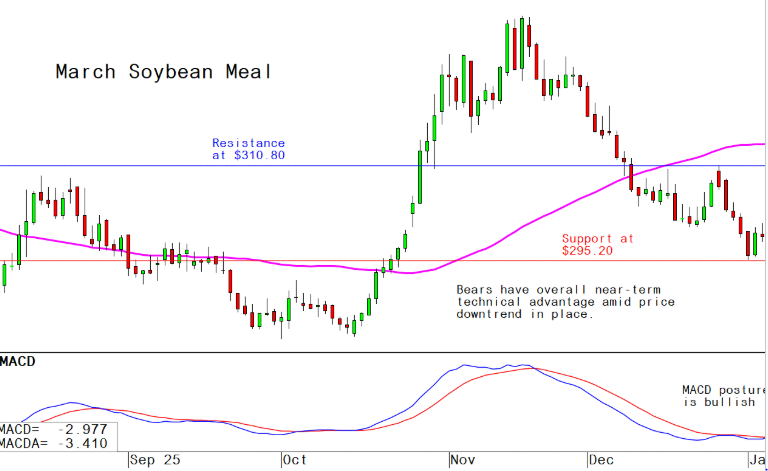
March soybean meal futures--$297.00 to $310.00, and with a sideways-lower bias
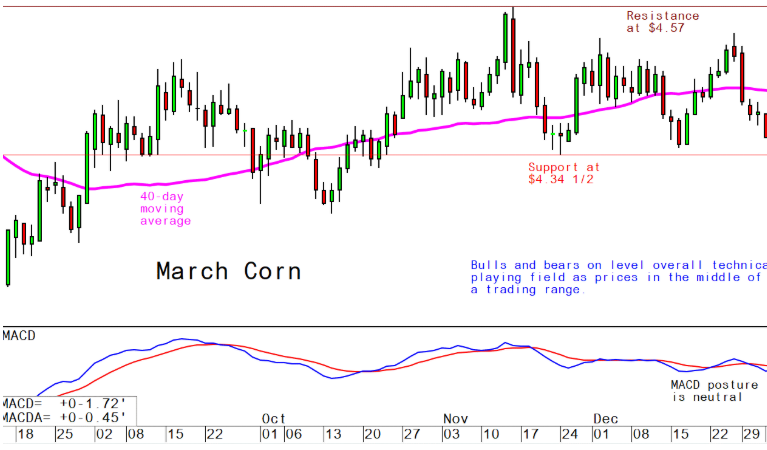
March corn futures--$4.34 1/2 to $4.53 and a sideways bias
Latest analytical daily charts lean hog, soybean meal and corn futures